EngagedScholarship@CSU

EngagedScholarship@CSU

  • My Account
  • FAQ
  • About
  • Home

Home > Law > LAWFACULTYSCH > FAC_BOOKS

Books

Printing is not supported at the primary Gallery Thumbnail page. Please first navigate to a specific Image before printing.
Follow

Switch View View Slideshow
  • Anderson's the Law of Professional Conduct in Ohio
  • Intellectual Property: Patents, Trademarks, and Copyright in a Nutshell
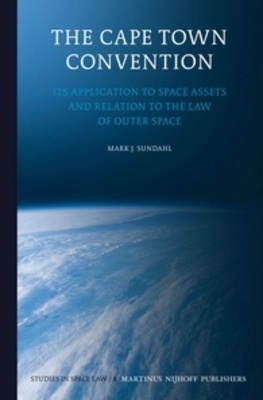
  • The Convention on International Interests in Mobile Equipment: Its Application to Space Assets and Relation to the Law of Outer Space
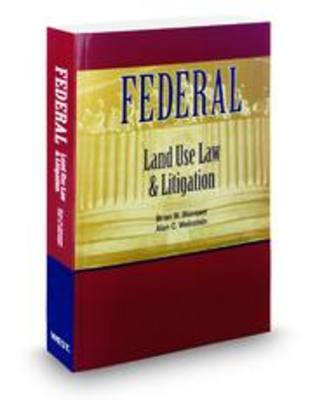
  • Federal Land Use Law and Litigation
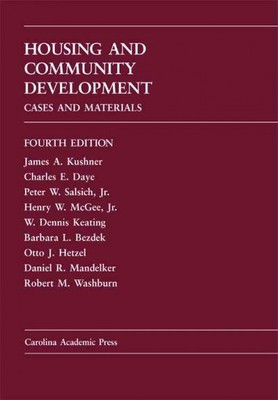
  • Housing and Community Development: Cases and Materials
  • The Law of Trusts
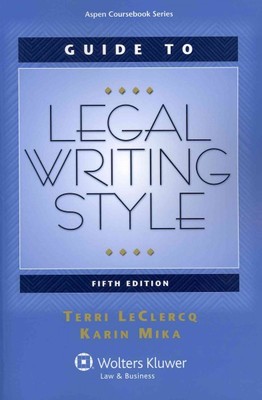
  • Guide to Legal Writing Style
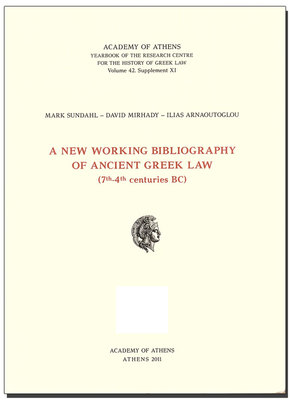
  • A New Working Bibliography of Ancient Greek Law
  • New Perspectives on Space Law Proceedings of the 53rd IISL Colloquium on the Law of Outer Space, Young Scholars Sessions
  • Anderson's The Law of Professional Conduct in Ohio
  • Genetic Dilemmas: Reproductive Technology, Parental Choices, and Children's Futures
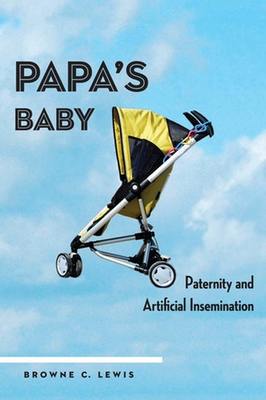
  • Papa's Baby: Paternity and Artificial Insemination
  • The Inheritance Rights of Children in the United States: Cases and Materials
  • Advanced Legal Research: A Context and Practice Textbook
  • Hypocrisy and Myth: The Hidden Order of the Rule of Law
  • Katz Giannelli Criminal Law
  • Strategies and Techniques of Law School Teaching: A Primer for New (and Not So New) Professors
  • Anderson's Ohio Law of Professional Conduct
  • Intellectual Property: Patents, Trademarks, and Copyright in a Nutshell
  • Federal Statutory Exemptions from Antitrust Law
  • Discovery From Current and Former Employees
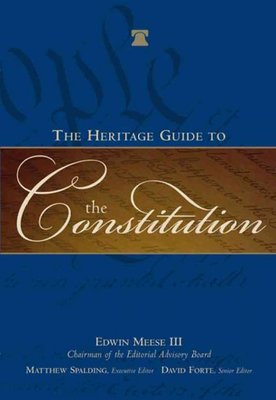
  • The Heritage Guide to the Constitution
  • Federal Income Tax: Doctrine, Structure, and Policy, 3rd Edition
  • Searches, Seizures and Drug Testing Procedures: Balancing Rights and School Safety, 2nd ed.
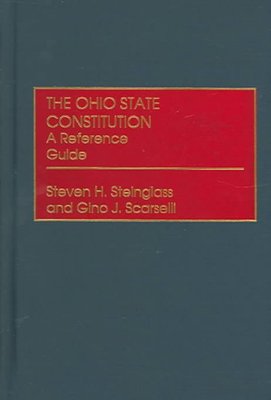
  • The Ohio State Constitution: A Reference Guide
  • Judaic Law: Source Material and Commentary
  • The Blues of a Revolution: The Damaging Impacts of Shrimp Farming
  • Katz Giannelli Criminal Law
  • California Secured Transactions Under Revised Article 9 of the Uniform Commercial Code:  Forms and Practice Manual
  • Constitutional Law: Doctrines, Strategy and Other Themes
  • The Imperial Republic:  A Structural History of American Constitutionalism from the Colonial Era to the Beginning of the Twentieth Century
  • Effective Strategies For Protecting Human Rights: Economic Sanctions, Use of National Courts and International Fora and Coercive Power
  • Effective Strategies For Protecting Human Rights: Prevention and Intervention, Trade, and Education
  • Genetic Dilemmas: Reproductive Technology, Parental Choices, and Children's Futures
  • Intellectual Property: Patents, Trademarks, and Copyright in a Nutshell
  • Studies in Islamic Law:  Classical and Contemporary Application
  • Federal Income Tax: Doctrine, Structure, and Policy
  • Medicating Schizophrenia: A History
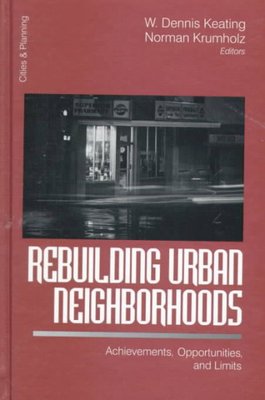
  • Rebuilding Urban Neighborhoods
  • Constitutional Law, A Legal Methods Approach
  • Torts and Tort Reform:  Cases and Comments on State and Federal Constitutional Law
  • The Mongolian Action Programme for the 21st Century: Executive Summary and Strategic Analysis
  • Natural Law and Contemporary Public Policy
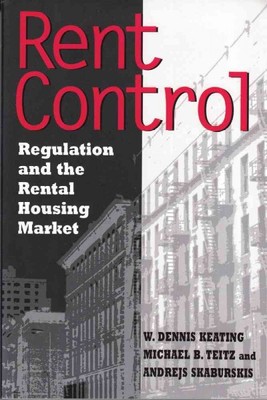
  • Rent Control: Regulation and the Rental Housing Market
  • Teaching Neighborhood Collaborative Planning
  • The Warrior Lawyer:  Powerful Strategies for Winning Legal Battles
  • Anderson's American Law of Zoning
  • A Citizen's Guide to Hazardous Waste Management in Northeast Ohio
  • Revitalizing Urban Neighborhoods
  • Federal Income Tax: Doctrine, Structure, and Policy, 1st Edition
  • Cleveland: A Metropolitan Reader
  • A Practical Guide to Winning Land Use Approvals and Permits
  • The Suburban Racial Dilemma: Housing and Neighborhoods
  • Evaluation of Pro-Integrative Mortgage Incentives in Suburban Cuyahoga County
  • The Law of Professional Responsibility in Ohio
  • State Court  Section 1983 Litigation: An Introductory Course for State Judges
  • Environment Cleveland: a Project of the Environmental Law Program of the Cleveland State University, College of Law
  • Intellectual Property: Patents, Trademarks, and Copyright in a Nutshell
  • Courts' Citation and Reference to Social Science in Legal Opinions Involving Gay Individuals
  • Abandoned Schools in the City of Cleveland: Their Impact on Neighborhoods, and Their Adaptive Re-Use
  • The Practicing Lawyers Guide to Professional Responsibility : How to Practice Law Ethically
  • Ohio Commercial and Consumer Law
  • Land Use and the Constitution:  Principles for Planning Practice
  • Strategies for Sustainable Societies: Proceedings and Materials from the Globescope '87 International Forum
  • A Comparative Study of Three Models of Racial Integration in Housing in Suburban Cleveland
  • Section 1983 Litigation in State Courts
  • Tort Reform, Changes in the Ohio Law of Product Liability
  • An Evaluation of the Cleveland Housing Court
  • Intellectual Property: Patents, Trademarks, and Copyright in a Nutshell
  • The Dubious Constitutionality of Local Controls Over the Religious Use of Land
  • The Supreme Court
  • Manual for Clinical Teachers
  • Manual for Clinical Teachers
 
  • The Right to Self-Determination under International Law : 'Selfistans', Secession, and the Great Powers' Rule by Milena Sterio

    The Right to Self-Determination under International Law : 'Selfistans', Secession, and the Great Powers' Rule

    Milena Sterio

    This book proposes a novel theory of self-determination; the Rule of the Great Powers. This book argues that traditional legal norms on self-determination have failed to explain and account for recent results of secessionist self-determination struggles. While secessionist groups like the East Timorese, the Kosovar Albanians and the South Sudanese have been successful in their quests for independent statehood, other similarly situated groups have been relegated to an at times violent existence within their mother states. Thus, Chechens still live without significant autonomy within Russia, and the South Ossetians and the Abkhaz have seen their conflicts frozen because of the peculiar geo-political equilibrium of power within the Caucuses region.

    The Rule of the Great Powers, which asserts that only those self-determination seeking entities which enjoy the support of the majority of the most powerful states (the Great Powers) will ultimately have their rights to self-determination fulfilled. The Great Powers, potent military, economic and political powerhouses such as the United States, China, Russia, Japan, the United Kingdom, France, Germany, and Italy, often dictate self-determination outcomes through their influence in global affairs. Issues of self-determination in the modern world can no longer be effectively resolved through the application of traditional legal rules; rather, resort must be had to novel theories, such as the Rule of the Great Powers.

    This book will be of particular interest to academics and students of law, political science and international relations.

  • Anderson's the Law of Professional Conduct in Ohio by Susan J. Becker, Lloyd B. Snyder, and Jack A. Guttenberg

    Anderson's the Law of Professional Conduct in Ohio

    Susan J. Becker, Lloyd B. Snyder, and Jack A. Guttenberg

    On February 1, 2007, the Ohio Rules of Professional Conduct replaced the Ohio Code of Professional Responsibility, a set of standards that had been in place since 1970. To reflect the new rules, Anderson's The Law of Professional Responsibility in Ohio has been revised by Susan J. Becker, Jack A. Guttenberg and Lloyd B. Snyder and reissued as Anderson's The Law of Professional Conduct in Ohio. The Ohio Rules of Professional Conduct depart from the prior Ohio Code of Professional Responsibility in many ways both large and small. This book describes the new standards. This new work describes in great detail which rules differ from prior principles, describes some of the more noteworthy features of the new rules and points out how changes in the new rules add clarity and precision to the former Code's substantive standards. The authors have also added a series of "best practices" tips outlining specific advice and warnings for attorneys.

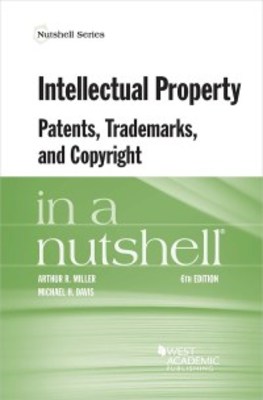
  • Intellectual Property: Patents, Trademarks, and Copyright in a Nutshell by Michael H. Davis and Arthur R. Miller

    Intellectual Property: Patents, Trademarks, and Copyright in a Nutshell

    Michael H. Davis and Arthur R. Miller

    Authors Michael Davis and famed Harvard professor Arthur Miller provide authoritative coverage on the foundations of patent protection, patentability, and the patenting process. Presents the fundamentals of trademarks and copyright laws. Text further addresses torts and property, antitrust and government regulation, concepts of federalism and state, and federal conflicts.

  • The Convention on International Interests in Mobile Equipment: Its Application to Space Assets and Relation to the Law of Outer Space by Mark J. Sundahl

    The Convention on International Interests in Mobile Equipment: Its Application to Space Assets and Relation to the Law of Outer Space

    Mark J. Sundahl

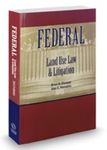
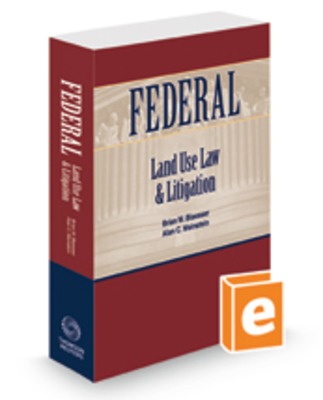
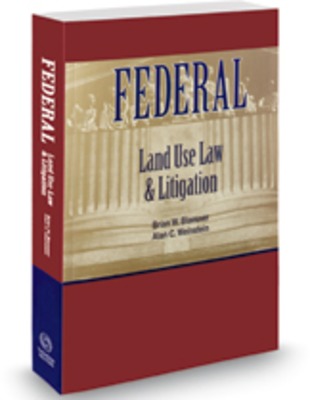
  • Federal Land Use Law and Litigation by Alan C. Weinstein, Brian W. Blaesser, and Daniel R. Mandelker

    Federal Land Use Law and Litigation

    Alan C. Weinstein, Brian W. Blaesser, and Daniel R. Mandelker

    Recent decisions by the U.S. Supreme Court, particularly its rulings on eminent domain and takings, require real estate and land use attorneys to have a thorough understanding of applicable federal law. Local governments must now take into account rights protected by the First, Fifth, and Fourteenth Amendments when considering regulation of private property. Federal Land Use Law and Litigation is the first in-depth work to analyze the complexities of this evolving practice area. This edition continues to highlight the pivotal federal constitutional and statutory limits affecting local land use and development controls.

  • Housing and Community Development: Cases and Materials by W Dennis Keating

    Housing and Community Development: Cases and Materials

    W Dennis Keating

    The fourth edition of Housing and Community Development presents a fresh and comprehensive look at housing law and policy with full coverage of the foreclosure crisis and its aftermath, exploring housing policies and neighborhood revitalization policies to address the new urban reality. It also discusses the issue of sustainability and the relationship between community development, housing, and climate change. The book contains materials covering housing policy and litigation; tenants' rights in the private and public spheres; urban redevelopment, including a comprehensive look at Kelo v. New London, including its setting and aftermath; and a completely revised section of the book on neighborhood revitalization and investment. The materials on fair housing and discrimination reflect many recent debates, including school desegregation, affirmative action, subprime and other variations of predatory lending, and other issues touching on race, class, disability, and familial bias. The materials are being published at the perfect time to debate the exciting current urban, suburban, and rural issues of housing, transportation, and community development.

  • The Law of Trusts by Browne C. Lewis

    The Law of Trusts

    Browne C. Lewis

  • Guide to Legal Writing Style by Karin Mika and Terri LeClercq

    Guide to Legal Writing Style

    Karin Mika and Terri LeClercq

    Ancillary text for legal writers focused on the nuances of legal writing style.

  • A New Working Bibliography of Ancient Greek Law by Mark J. Sundahl, Ēlias Arnautoglu, and David C. Mirhady

    A New Working Bibliography of Ancient Greek Law

    Mark J. Sundahl, Ēlias Arnautoglu, and David C. Mirhady

    The book contains a comprehensive bibliography of scholarship on ancient Greek law during the archaic and classical periods from the 7th to the 4th century B.C. The purpose of the project was to bring together, in one place, the entire body of scholarship in the field in order to facilitate further research in ancient Greek law.

  • New Perspectives on Space Law Proceedings of the 53rd IISL Colloquium on the Law of Outer Space, Young Scholars Sessions by Mark J. Sundahl and V. Gopalakrishnan

    New Perspectives on Space Law Proceedings of the 53rd IISL Colloquium on the Law of Outer Space, Young Scholars Sessions

    Mark J. Sundahl and V. Gopalakrishnan

    Contains the papers of the participants in the Young Scholars Session of the 53rd Annual Colloquium on the Law of Outer Space held in 2010 in Prague, Czech Republic, edited by Mark J. Sundahl and V. Gopalakrishnan. Papers include:

    Concise History of Space Law; Life and Work of Professor Vladimir Mandl -- A Pioneer of Space Law; Early Writings in German of the Young Discipline of Space Law; Commercial Exploitation of Outer Space and Celestial Bodies; Potential Uniform International Legal Framework for Regulation of Private Space Activities; Prospects for Legal Use and Water Rights on the Moon and Other Celestial Bodies; Current Status and Recent Developments of the Non-Discriminatory Principle in the 1986 UN Principles on Remote Sensing; Legal Pluralism in Outer Space; Space and Lisbon. A New Type of Competence to Shape the Regulatory Framework for Commercial Space Activities; Forum-Selection Clauses in Suborbital Space Tourism Contracts and EU Law; Rethinking Responsibility in the Law of Outer Space; One Man's Space Junk is Another Man's Archaeological Treasure; Recalibrating the Moon Treaty to the Domain of Development; Legal Framework of Satellite Positioning with Particular Reference to Privacy; Legal Aspects of Regional Space Cooperation in Latin America

  • Anderson's The Law of Professional Conduct in Ohio by Susan J. Becker, Jack A. Guttenberg, and Lloyd B. Snyder

    Anderson's The Law of Professional Conduct in Ohio

    Susan J. Becker, Jack A. Guttenberg, and Lloyd B. Snyder

    On February 1, 2007, the Ohio Rules of Professional Conduct replaced the Ohio Code of Professional Responsibility, a set of standards that had been in place since 1970. To reflect the new rules, Anderson's The Law of Professional Responsibility in Ohio has been revised by Susan J. Becker, Jack A. Guttenberg and Lloyd B. Snyder and reissued as Anderson's The Law of Professional Conduct in Ohio. The Ohio Rules of Professional Conduct depart from the prior Ohio Code of Professional Responsibility in many ways both large and small. This book describes the new standards.

  • Genetic Dilemmas: Reproductive Technology, Parental Choices, and Children's Futures by Dena S. Davis

    Genetic Dilemmas: Reproductive Technology, Parental Choices, and Children's Futures

    Dena S. Davis

    What limits the genetic choices parents make for their children? Is it okay to select the sex of our children, or for deaf parents to select deaf children? In this second edition of Genetic Dilemmas, Davis argues that parental reproductive autonomy should be limited by respect for the future autonomy of the children created by these measures.

  • Papa's Baby: Paternity and Artificial Insemination by Browne C. Lewis

    Papa's Baby: Paternity and Artificial Insemination

    Browne C. Lewis

    When a child is conceived from sexual intercourse between a married, heterosexual couple, the child has a legal father and mother. Whatever may happen thereafter, the child’s parents are legally bound to provide for their child, and if they don’t, they’re held accountable by law. But what about children created by artificial insemination? When it comes to paternity, the law is full of gray areas, resulting in many cases where children have no legal fathers. In Papa’s Baby, Browne C. Lewis argues that the courts should take steps to insure that all children have at least two legal parents. Additionally, state legislatures should recognize that more than one class of fathers may exist and allocate paternal responsibility based, again, upon the best interest of the child. Lewis supplements her argument with concrete methods for dealing with different types of cases, including anonymous and non-anonymous sperm donors, married and unmarried women, and lesbian couples. In so doing, she first establishes different types of paternity, and then draws on these to create an expanded definition of paternity.

  • The Inheritance Rights of Children in the United States: Cases and Materials by Browne C. Lewis

    The Inheritance Rights of Children in the United States: Cases and Materials

    Browne C. Lewis

    Nadya Suleman conceived fourteen children using artificial insemination. Michael Jackson and Clay Aiken became fathers using surrogates. These and other high profile cases have shined the spotlight on the need to ensure that children have adults who are financially responsible for providing for them. As the number of ways to create a family has increased, the number of legal classes of children has expanded. That expansion has impacted the inheritance system. The Inheritance Rights of Children in the United States focuses upon the inheritance rights of the following classes of children: marital children, adopted children, non-marital children, stepchildren, posthumously conceived children, children conceived by artificial insemination, and children conceived under surrogate arrangements. It uses cases, statutes, and problems to highlight the legal issues that have arisen due to the existence of so many classes of children. This book is appropriate for use as the primary text for both classes and seminars.

  • Advanced Legal Research: A Context and Practice Textbook by Kristina L. Niedringhaus

    Advanced Legal Research: A Context and Practice Textbook

    Kristina L. Niedringhaus

    This innovative textbook is designed to focus student learning on the process of legal research in addition to the best use of specific resources. Students are encouraged to think analytically about how they approach research and are presented with a variety of techniques for planning, conducting, assessing, and synthesizing their research. Multiple techniques, including exercises and visual aids are used to engage a variety of learning styles and provide multiple kinds of assessment. Case and statute research as well as the use of a variety of secondary and practice materials are covered in addition to legislative history, administrative law, legal ethics, foreign and international law and other specialized topics. Students are also presented with a variety of techniques and sources for conducting cost-conscious research. Throughout the textbook students are provided with opportunities for self-assessment of their learning, as well as questions that can be used as class assignments.

  • Hypocrisy and Myth: The Hidden Order of the Rule of Law by David R. Barnhizer and Daniel D. Barnhizer

    Hypocrisy and Myth: The Hidden Order of the Rule of Law

    David R. Barnhizer and Daniel D. Barnhizer

    The Rule of Law is neither a scientific nor a particularly rational invention, but an unfolding performance that has been "playing" in America for several hundred years, albeit with some very serious abuses and blind spots. Hypocrisy & Myth takes the position that the "truth" of the Rule of Law requires a degree of hypocrisy and suspension of disbelief in regard to the ongoing "performance". This in no way renders the system illegitimate. It does, however, make the Rule of Law an easy target for criticism in both theory and application. But even given its vital role, we have little idea of what the Rule of Law is, how it works, and the ways in which it is threatened through our neglect, self-interest, and ignorance. As is explored throughout Hypocrisy & Myth, the Rule of Law is simultaneously facilitator, catalyst, and barrier against the abuse of power. It motivates individuals toward ideals of evolving community, including the development of our highest qualities of humanity as individuals. Of equal importance, the Rule of Law serves as a governor on the uses of collective power against members of that community. In this sense, the Rule of Law provides a rallying point from which individuals may morally resist abuses of power by the community. In this latter dimension, the Rule of Law limits the ability of the state to control citizens through the specific exercise of legal power.

  • Katz Giannelli Criminal Law by Phyllis L. Crocker, Lewis R. Katz, Judith P. Lipton, and John Martin

    Katz Giannelli Criminal Law

    Phyllis L. Crocker, Lewis R. Katz, Judith P. Lipton, and John Martin

    The authors have integrated the Rules of Criminal Procedure with revised code provisions, common-law precedent, and recent case law from Ohio, other states, and the federal system. Expert commentary is enhanced with convenient cross-references to all major related treatises. One volume is devoted to forms related to criminal law and procedure, including more than 400 notices, warrants, indictments, complaints, and motions. Topics include sentencing, search and seizure, exclusion of evidence and motions to suppress, Miranda issues, limits on police action during traffic stops, and sexual predator registration requirements.

  • Strategies and Techniques of Law School Teaching: A Primer for New (and Not So New) Professors by Kevin F. O'Neill and Howard Katz

    Strategies and Techniques of Law School Teaching: A Primer for New (and Not So New) Professors

    Kevin F. O'Neill and Howard Katz

    Strategies and Techniques of Law School Teaching is intended to help you, as a new law teacher, prepare for your first semesters in the classroom. It begins at the preliminary stages of planning a new course and takes you all the way to writing and grading your final exam. Authors Katz and O’Neill offer experience and insight to the tasks of coming up with teaching objectives, choosing your book, crafting your syllabus, and creating a classroom atmosphere that is conducive to learning. The day-to-day teaching techniques in this primer for new (and not so new) professors will prepare you to successfully field students’ questions, teach legal analysis to first-year students, and make the most of today’s pedagogy and technology to support your teaching.
  • Anderson's Ohio Law of Professional Conduct by Susan J. Becker, Jack A. Guttenberg, and Lloyd B. Snyder

    Anderson's Ohio Law of Professional Conduct

    Susan J. Becker, Jack A. Guttenberg, and Lloyd B. Snyder

    On February 1, 2007, the Ohio Rules of Professional Conduct replaced the Ohio Code of Professional Responsibility, a set of standards that had been in place since 1970. To reflect the new rules, Anderson's The Law of Professional Responsibility in Ohio has been revised by Susan J. Becker, Jack A. Guttenberg and Lloyd B. Snyder and reissued as Anderson's The Law of Professional Conduct in Ohio. The Ohio Rules of Professional Conduct depart from the prior Ohio Code of Professional Responsibility in many ways both large and small. This book describes the new standards.

  • Intellectual Property: Patents, Trademarks, and Copyright in a Nutshell by Michael H. Davis and Arthur R. Miller

    Intellectual Property: Patents, Trademarks, and Copyright in a Nutshell

    Michael H. Davis and Arthur R. Miller

    Authors Michael Davis and famed Harvard professor Arthur Miller provide authoritative coverage on the foundations of patent protection, patentability, and the patenting process. Presents the fundamentals of trademarks and copyright laws. Text further addresses torts and property, antitrust and government regulation, concepts of federalism and state, and federal conflicts.

  • Federal Statutory Exemptions from Antitrust Law by Christopher Sagers and Peter Cartensen

    Federal Statutory Exemptions from Antitrust Law

    Christopher Sagers and Peter Cartensen

    Currently more than twenty statutory antitrust exemptions exist, scattered throughout the U.S. Code, which touch upon widely differing aspects of commerce. Now, for the first time, this monograph comprehensively surveys the diverse array of statutes currently in force that modify or limit federal antitrust law, and analyzes their costs and benefits.

  • Discovery From Current and Former Employees by Susan J. Becker

    Discovery From Current and Former Employees

    Susan J. Becker

    A unique handbook for litigators that describes and analyzes an often tricky area of discovery: dealing with the current and former employees of one's opponent. It provides overall guidance and discusses cases from all fifty states in order to point the practicing litigator in the right direction.

  • The Heritage Guide to the Constitution by David F. Forte, Edwin Meese, and Matthew Spalding

    The Heritage Guide to the Constitution

    David F. Forte, Edwin Meese, and Matthew Spalding

    Analyzes each line of the American federal government's written set of principles and precedents, interpreting the original intent of each clause of the Constitution.

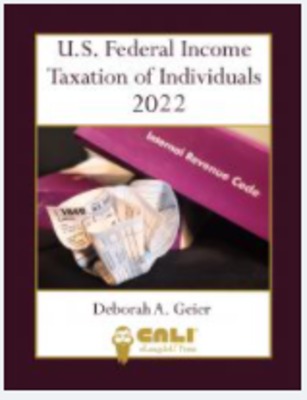
  • Federal Income Tax: Doctrine, Structure, and Policy, 3rd Edition by Deborah A. Geier; Joseph M. Dodge; and J. Clifton Fleming, Jr.

    Federal Income Tax: Doctrine, Structure, and Policy, 3rd Edition

    Deborah A. Geier; Joseph M. Dodge; and J. Clifton Fleming, Jr.

    In this well-rounded and student-friendly casebook, theory and policy discussions are threaded throughout the text material, which provides the basis for dealing with the problems and questions that now appear at the end of the section or subsection to which they relate. The Third Edition is not merely an update of the Second Edition; it is a complete rewrite.

  • Searches, Seizures and Drug Testing Procedures: Balancing Rights and School Safety, 2nd ed. by Ralph Mawdsley and Charles J. Russo

    Searches, Seizures and Drug Testing Procedures: Balancing Rights and School Safety, 2nd ed.

    Ralph Mawdsley and Charles J. Russo

    This authoritative resource examines reasonable student and employee searches and seizures — along with proper drug-testing protocol. Practical recommendations and working guidelines provide essential benchmarks for balancing student and employee privacy rights with school safety — to help you:

    Understand the implications of-and methods available for-searching personal property and employees' computers

    Create legally sound drug-testing policies

    Know what constitutes permissible student and staff searches-and what doesn't

    And more!

 
« previous page
page 1 of 3
next page »


Follow

Advanced Search

 
  • Notify me via email or RSS

Browse

  • Collections
  • Disciplines
  • Disciplines
  • Authors
  • Years

Author Corner

  • Author FAQ
  • Submit Research

Links

  • C|M|LAW Web Page

C|M|LAW Faculty Blog


This collection is part of the
Digital Commons Network

Architecture • Arts and Humanities • Business • Education • Engineering • Law • Life Sciences
Medicine and Health Sciences • Physical Sciences and Mathematics • Social and Behavioral Sciences

Digital Commons

Home | About | FAQ | My Account | Accessibility Statement