EngagedScholarship@CSU

EngagedScholarship@CSU

  • My Account
  • FAQ
  • About
  • Home

Home > BOOKS > SCHOLBKS

Scholarship Collection

Printing is not supported at the primary Gallery Thumbnail page. Please first navigate to a specific Image before printing.


Follow

Switch View View Slideshow
  • Field Guide to Spectroscopy
  • Introductory Chemistry, v. 1.0
  • Physical Chemistry
  • The Basics of Spectroscopy
  • A Bibliography of Matrix Isolation Spectroscopy : 1954-1985
  • The Basics of General, Organic, and Biological Chemistry, v. 1.0
  • A Citizen's Guide to Hazardous Waste Management in Northeast Ohio
  • Manual for Clinical Teachers
  • Manual for Clinical Teachers
  • Strategies for Sustainable Societies: Proceedings and Materials from the Globescope '87 International Forum
  • Effective Strategies For Protecting Human Rights: Economic Sanctions, Use of National Courts and International Fora and Coercive Power
  • Effective Strategies For Protecting Human Rights: Prevention and Intervention, Trade, and Education
  • Environment Cleveland: a Project of the Environmental Law Program of the Cleveland State University, College of Law
  • The Mongolian Action Programme for the 21st Century: Executive Summary and Strategic Analysis
  • The Warrior Lawyer:  Powerful Strategies for Winning Legal Battles
  • Hypocrisy and Myth: The Hidden Order of the Rule of Law
  • The Blues of a Revolution: The Damaging Impacts of Shrimp Farming
  • The Jewish Graphic Novel: Critical Approaches
  • Jewish Art: A Modern History
  • Discovery From Current and Former Employees
  • Anderson's Ohio Law of Professional Conduct
  • Anderson's The Law of Professional Conduct in Ohio
  • Anderson's the Law of Professional Conduct in Ohio
  • Freedom of Choice: Vouchers in American Education
  • A Political Biography of Delarivier Manley
  • Social Control: An Introduction
  • Katz Giannelli Criminal Law
  • Katz Giannelli Criminal Law
  • Genetic Dilemmas: Reproductive Technology, Parental Choices, and Children's Futures
  • Genetic Dilemmas: Reproductive Technology, Parental Choices, and Children's Futures
  • How Genes Tell Stories
  • Notes from a Narrow Ridge: Religious Studies and Bioethics
  • Intellectual Property: Patents, Trademarks, and Copyright in a Nutshell
  • Intellectual Property: Patents, Trademarks, and Copyright in a Nutshell
  • Intellectual Property: Patents, Trademarks, and Copyright in a Nutshell
  • Intellectual Property: Patents, Trademarks, and Copyright in a Nutshell
  • Intellectual Property: Patents, Trademarks, and Copyright in a Nutshell
  • Concrete Pavement Design, Construction, and Performance
  • A Dictionary of Nonprofit Terms & Concepts
  • Courts' Citation and Reference to Social Science in Legal Opinions Involving Gay Individuals
  • Algebraic Models in Geometry
  • Natural Law and Contemporary Public Policy
  • Studies in Islamic Law:  Classical and Contemporary Application
  • The Supreme Court
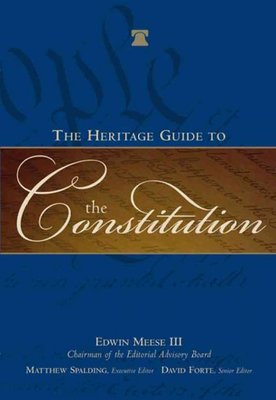
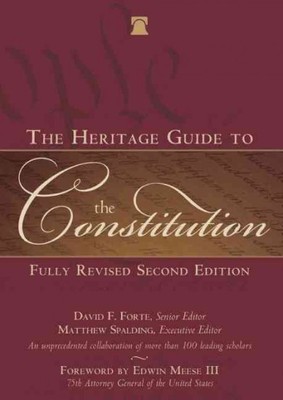
  • The Heritage Guide to the Constitution
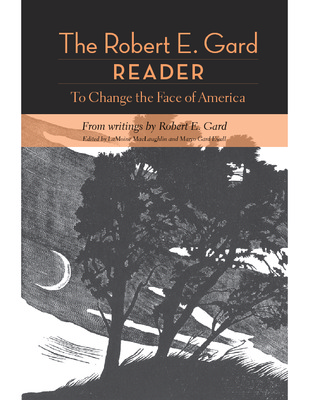
  • The Robert E. Gard Reader : To Change the Face of America, From Writings by Robert E. Gard
  • The Dubious Constitutionality of Local Controls Over the Religious Use of Land
  • Federal Income Tax: Doctrine, Structure, and Policy, 1st Edition
  • Federal Income Tax: Doctrine, Structure, and Policy
  • Federal Income Tax: Doctrine, Structure, and Policy, 3rd Edition
  • Medicating Schizophrenia: A History
  • Flow Diagnostics, Chemically Reacting Turbulent Flow Modeling and Turbulent Mixing : a Summary of Project Studies in Combustion
  • Simplified jet-A kinetic mechanism for combustor application
  • Reading and Learning to Read, 8th ed.
  • Drugs, Brain and Behavior. 6th ed.
  • Management Mistakes and Successes, 11th ed.
  • DemocraticArtworks : Politics and the Arts from Trilling to Dylan
  • Subversive Sounds: Race and the Birth of Jazz in New Orleans
  • Stirling Convertor Regenerators
  • Integral Psychotherapy: Inside Out/Outside In
  • Abandoned Schools in the City of Cleveland: Their Impact on Neighborhoods, and Their Adaptive Re-Use
  • Evaluation of Pro-Integrative Mortgage Incentives in Suburban Cuyahoga County
  • Housing and Community Development: Cases and Materials
  • Rebuilding Urban Neighborhoods
  • Rent Control: Regulation and the Rental Housing Market
  • Teaching Neighborhood Collaborative Planning
  • The Suburban Racial Dilemma: Housing and Neighborhoods
  • Cleveland: A Metropolitan Reader
  • Revitalizing Urban Neighborhoods
  • A Comparative Study of Three Models of Racial Integration in Housing in Suburban Cleveland
  • An Evaluation of the Cleveland Housing Court
  • Housing and Community Development: Cases and Materials. 4th ed.
  • Vibration Analysis of a Split Path Gearbox
  • Religious Women in Golden Age Spain: the Permeable Cloister
  • Papa's Baby: Paternity and Artificial Insemination
  • The Inheritance Rights of Children in the United States: Cases and Materials
  • The Law of Trusts
  • Assessing and programming gross motor development for children
  • Assessment of Library Collections in a Consortial Enveronment: Experiences from Ohio
  • The Counselor Educator's Survival Guide: Designing and Teaching Outstanding Courses in Community Mental Health Counseling and School Counseling
  • Pupil Transportation and the Law, 2nd ed.
  • Searches, Seizures and Drug Testing Procedures: Balancing Rights and School Safety, 2nd ed.
  • In, Out, and Beyond: Studies on Border Confrontations, Resolutions, and  Encounters
  • Guide to Legal Writing Style
  • Cleveland Jazz History,  Second Edition
  • Advanced Legal Research: A Context and Practice Textbook
  • A Bibliography of Matrix Isolation Spectroscopy : 1985-1997
  • Strategies and Techniques of Law School Teaching: A Primer for New (and Not So New) Professors
  • Differential Geometry and its Applications
  • Images of America: Cleveland's Lighthouses
  • Educating Gifted Students in Middle School: A Practical Guide. 2nd
  • Teaching to the Top: Understanding and Meeting the Needs of Gifted Middle Schoolers
  • Dynamics of a Split Torque Helicopter Transmission
  • Chemistry: Principles and Practice, 3rd ed.
  • New Philosophy of Human Nature
  • Federal Statutory Exemptions from Antitrust Law
  • Psychology as a Major: Is it Right For Me and What Can I Do With My Degree
  • The Chief Purpose of Universities: Academic Discourse and Diversity of Ideas
  • Optimal State Estimation: Kalman, H Infinity, and Nonlinear Approaches
  • The Law of Professional Responsibility in Ohio
  • The Practicing Lawyers Guide to Professional Responsibility : How to Practice Law Ethically
  • New Orleans on Parade: Tourism and the Transformation of the Crescent City
  • American Tourism: Constructing a National Tradition
  • Runner's Book of Training Secrets
  • Career Psychology in the South African Context, 2nd ed.
  • Section 1983 Litigation in State Courts
  • State Court  Section 1983 Litigation: An Introductory Course for State Judges
  • The Ohio State Constitution: A Reference Guide
  • The Right to Self-Determination under International Law : 'Selfistans', Secession, and the Great Powers' Rule
  • The Convention on International Interests in Mobile Equipment: Its Application to Space Assets and Relation to the Law of Outer Space
  • A New Working Bibliography of Ancient Greek Law
  • New Perspectives on Space Law Proceedings of the 53rd IISL Colloquium on the Law of Outer Space, Young Scholars Sessions
  • California Secured Transactions Under Revised Article 9 of the Uniform Commercial Code:  Forms and Practice Manual
  • Ohio Commercial and Consumer Law
  • Village Elections in China: Democratizing the Countryside
  • Eating Smoke: Fire in Urban America, 1800-1950
  • Envisioning the Future of Doctoral Education : Preparing Stewards of the Discipline, Carnegie Essays on the Doctorate
  • The Formation of Scholars : Rethinking Doctoral Education for the Twenty-first Century
  • Fundamentals of Physics Extended, 9th ed.
  • The Flying Circus of Physics, 2nd ed.
  • Anderson's American Law of Zoning
  • Land Use and the Constitution:  Principles for Planning Practice
  • Federal Land Use Law and Litigation
  • A Practical Guide to Winning Land Use Approvals and Permits
  • Ethics in Counseling & Psychotherapy, 4th Edition
  • Judaic Law: Source Material and Commentary
  • Tort Reform, Changes in the Ohio Law of Product Liability
  • Torts and Tort Reform:  Cases and Comments on State and Federal Constitutional Law
  • The Duty to Protect: Ethical, Legal, and Professional Considerations for Mental Health Professionals
  • Cleveland, Ohio
  • The Imperial Republic:  A Structural History of American Constitutionalism from the Colonial Era to the Beginning of the Twentieth Century
 
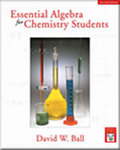
  • Essential Algebra for Chemistry Students, 2nd ed. by David W. Ball

    Essential Algebra for Chemistry Students, 2nd ed.

    David W. Ball

    This short book is intended for students who lack confidence and/or competency in the essential mathematics skills necessary to survive in general chemistry. Each chapter focuses on a specific type of skill and has worked-out examples to show how these skills translate to chemical problem solving.

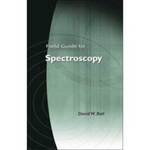
  • Field Guide to Spectroscopy by David W. Ball

    Field Guide to Spectroscopy

    David W. Ball

    This field guide covers a broad spectrum of topics in the field of spectroscopy, condensing the subjects to their essentials. As such, novices can use this guide to obtain an overview of the field, and experts can use it as a quick reference. Beginning with basic definitions and explanations, this guide then describes the instruments that are used in the field-from filters, lenses, mirrors, and modulators, to monochromators, interferometers, and detectors. A third section outlines theory and methods as they relate to spectroscopy: the Fourier transform, quantum mechanics, approximation methods, nuclear magnetic resonance, and more. Additional features include a glossary of variables and symbols, and an equation summary.

  • Introductory Chemistry, v. 1.0 by David W. Ball

    Introductory Chemistry, v. 1.0

    David W. Ball

    David W. Ball of Cleveland State University brings his new survey of general chemistry text, Introductory Chemistry, to the market with a fresh theme that will be sure to hold student interest: "Chemistry is Everywhere." Introductory Chemistry is intended for a one-semester introductory or preparatory chemistry course. Throughout the chapters, David presents two features that reinforce the theme of the textbook, that chemistry is everywhere. The first is the boxed feature titled, appropriately, ”Chemistry is Everywhere“. This feature takes a topic of the chapter and demonstrates how this topic shows up in everyday life. In the introductory chapter, ”Chemistry is Everywhere“ focuses on the personal hygiene products that students may use every morning: toothpaste, soap, shampoo among others. These products are chemicals, aren’t they? This book explores some of the chemical reactions like the ones that give students clean and healthy teeth, and shiny hair. This feature makes it clear to students that chemistry is, indeed, everywhere, and it will promote student retention in what is sometimes considered an intimidating course. The second boxed feature focuses on chemistry that students likely indulge in every day: eating and drinking. In the ”Food and Drink App“, David discusses how the chemistry of the chapter applies to things that students eat and drink every day. Carbonated beverages depend on the behavior of gases, foods contain acids and bases, and everyone actually eats certain rocks. (Yikes!) Cooking, eating, drinking, metabolism — all chemical processes students are involved with all the time. These features allow students to see the things we interact with every day in a new light — as chemistry.
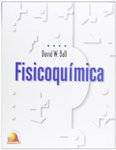
  • Physical Chemistry by David W. Ball

    Physical Chemistry

    David W. Ball

    Intended for the year long, calculus-based physical chemistry course for science and engineering majors, PHYSICAL CHEMISTRY follows a traditional organization while concentrating on core topics. The text does not cover some higher level topics-for example, photochemistry, molecular beams, thermal physics, and polymers- found in some textbooks, and rarely covered in the undergraduate physical chemistry course, but more fully explains the essential elements of the discipline. Written by a dedicated chemical educator and researcher, this text is intended for those students who are trying to learn physical chemistry-a book that works as a textbook and not as an encyclopedia. Where appropriate, there is some focus on mathematical manipulations, providing students with a review of calculus applications as applied to physical chemistry.

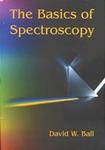
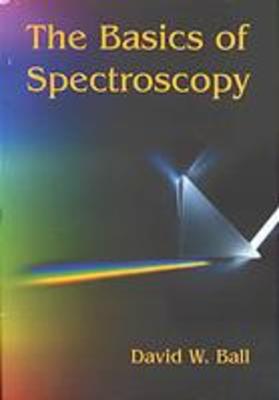
  • The Basics of Spectroscopy by David W. Ball

    The Basics of Spectroscopy

    David W. Ball

    Spectroscopy--the study of matter using electromagnetic radiation--and its applications as a scientific tool are the focus of this tutorial. Topics covered include the interaction of light with matter, spectrometer fundamentals, quantum mechanics, selection rules, and experimental factors.

  • A Bibliography of Matrix Isolation Spectroscopy : 1954-1985 by David W. Ball, Leif Fredin, Zakya H. Kafafi, Robert H. Hauge, and John L. Margrave

    A Bibliography of Matrix Isolation Spectroscopy : 1954-1985

    David W. Ball, Leif Fredin, Zakya H. Kafafi, Robert H. Hauge, and John L. Margrave

  • The Basics of General, Organic, and Biological Chemistry, v. 1.0 by David W. Ball, John W. Hill, and Rhonda J. Scott

    The Basics of General, Organic, and Biological Chemistry, v. 1.0

    David W. Ball, John W. Hill, and Rhonda J. Scott

    Are you looking for a new GOB Chemistry book that is designed specifically for the GOB course? Well, you've found one.

    The Basics of General, Organic, and Biological Chemistry by David W. Ball, John W. Hill, and Rhonda J. Scott is a new textbook offering for the one-semester GOB Chemistry course. The authors designed this book from the ground up to meet the needs of a one-semester course. It is 20 chapters in length and approximately 350-400 pages; just the right breadth and depth for instructors to teach and students to grasp.

    In addition, The Basics of General, Organic, and Biological Chemistry is written not by one chemist, but THREE chemistry professors with specific, complimentary research and teaching areas. David W. Ball’s specialty is physical chemistry, John W. Hill’s is organic chemistry, and finally, Rhonda J. Scott’s background is in enzyme and peptide chemistry. These three authors have the expertise to identify and present only the most important material for students to learn in the GOB Chemistry course.

    These experienced authors have ensured their text has ample in-text examples, and ”Test Yourself“ questions following the examples so students can immediately check their comprehension. The end-of-chapter exercises will be paired, with one answered in the back of the text so homework can easily be assigned and self-checked.

  • A Citizen's Guide to Hazardous Waste Management in Northeast Ohio by David R. Barnhizer

    A Citizen's Guide to Hazardous Waste Management in Northeast Ohio

    David R. Barnhizer

  • Manual for Clinical Teachers by David R. Barnhizer

    Manual for Clinical Teachers

    David R. Barnhizer

  • Manual for Clinical Teachers by David R. Barnhizer

    Manual for Clinical Teachers

    David R. Barnhizer

  • Strategies for Sustainable Societies: Proceedings and Materials from the Globescope '87 International Forum by David R. Barnhizer

    Strategies for Sustainable Societies: Proceedings and Materials from the Globescope '87 International Forum

    David R. Barnhizer

  • Effective Strategies For Protecting Human Rights: Economic Sanctions, Use of National Courts and International Fora and Coercive Power by David R. Barnhizer

    Effective Strategies For Protecting Human Rights: Economic Sanctions, Use of National Courts and International Fora and Coercive Power

    David R. Barnhizer

    This text brings together the experiences of a diverse range of leading human rights advocates and activists to demonstrate strategies for protecting human rights. The book identifies strategic problems and approaches and offers a range of strategies for sanctioning human rights More...

    offenders and for inhibiting the behaviour of those who might otherwise engage in such activities. The contributors include Noam Chomsky, Justice Richard Goldstone of the Constitutional Court of South Africa and David Rawson, United States Ambassador to Rwanda during the tragic genocide. Those who work in the disparate field of human rights increasingly understand the need to see the system strategically rather than piecemeal. This volume captures their insights and looks at both private and public actors, including the uses and limitations of international fora to prosecute violations. The focus is expanded to include private actions because political issues too often interfere with enforcement of human rights laws - allowing violators to hide behind the unwillingness of national governments to take action.

  • Effective Strategies For Protecting Human Rights: Prevention and Intervention, Trade, and Education by David R. Barnhizer

    Effective Strategies For Protecting Human Rights: Prevention and Intervention, Trade, and Education

    David R. Barnhizer

    The second volume of Effective Strategies for Protecting Human Rights concentrates on strategies for increasing our ability to monitor and investigate, and to force human rights concerns into the rules of the trading regime that is trumping humanistic concerns. Including impressive contributions from representatives of all facets of the human rights community, the book also offers a probing examination of the strategies for educating different constituencies to behave in a more humane way. Issues considered include monitoring and investigation of human rights violations, protection of journalists and human rights workers, the role and limits of the various human rights conventions, and the use of information and communication technologies to improve human rights monitoring, enforcement and prosecution. The work considers at some length the factors involved in balancing the inherent conflict between trade, human rights, and the environment, In considering educational strategies, the focus is on women, community education in human rights, and the special challenge involved in educating military and police to respect human rights.

  • Environment Cleveland: a Project of the Environmental Law Program of the Cleveland State University, College of Law by David R. Barnhizer

    Environment Cleveland: a Project of the Environmental Law Program of the Cleveland State University, College of Law

    David R. Barnhizer

  • The Mongolian Action Programme for the 21st Century: Executive Summary and Strategic Analysis by David R. Barnhizer

    The Mongolian Action Programme for the 21st Century: Executive Summary and Strategic Analysis

    David R. Barnhizer

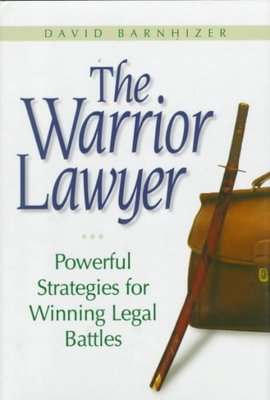
  • The Warrior Lawyer: Powerful Strategies for Winning Legal Battles by David R. Barnhizer

    The Warrior Lawyer: Powerful Strategies for Winning Legal Battles

    David R. Barnhizer

    The Warrior Lawyer combines the wisdom of Sun Tzu's classic work on military strategy, The Art of War, with Musashi's Book of Five Rings, and integrates their brilliantly structured strategic systems with the processes of litigation - including negotiation, trial, case evaluation, and planning. The result is a powerful synthesis of strategy, judgment, planning, and action that enables legal and business strategists - as well as other individuals concerned with achieving goals - to significantly enhance their chances of winning.

  • Hypocrisy and Myth: The Hidden Order of the Rule of Law by David R. Barnhizer and Daniel D. Barnhizer

    Hypocrisy and Myth: The Hidden Order of the Rule of Law

    David R. Barnhizer and Daniel D. Barnhizer

    The Rule of Law is neither a scientific nor a particularly rational invention, but an unfolding performance that has been "playing" in America for several hundred years, albeit with some very serious abuses and blind spots. Hypocrisy & Myth takes the position that the "truth" of the Rule of Law requires a degree of hypocrisy and suspension of disbelief in regard to the ongoing "performance". This in no way renders the system illegitimate. It does, however, make the Rule of Law an easy target for criticism in both theory and application. But even given its vital role, we have little idea of what the Rule of Law is, how it works, and the ways in which it is threatened through our neglect, self-interest, and ignorance. As is explored throughout Hypocrisy & Myth, the Rule of Law is simultaneously facilitator, catalyst, and barrier against the abuse of power. It motivates individuals toward ideals of evolving community, including the development of our highest qualities of humanity as individuals. Of equal importance, the Rule of Law serves as a governor on the uses of collective power against members of that community. In this sense, the Rule of Law provides a rallying point from which individuals may morally resist abuses of power by the community. In this latter dimension, the Rule of Law limits the ability of the state to control citizens through the specific exercise of legal power.

  • The Blues of a Revolution: The Damaging Impacts of Shrimp Farming by David R. Barnhizer and Isabel de la Torre

    The Blues of a Revolution: The Damaging Impacts of Shrimp Farming

    David R. Barnhizer and Isabel de la Torre

    Case studies from around the world dealing with the damaging social and environment impacts of shrimp aquaculture.

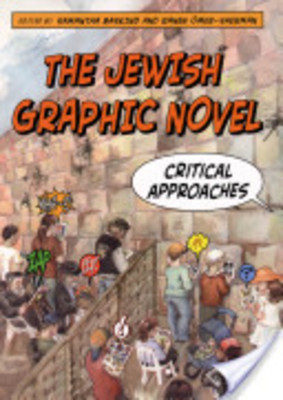
  • The Jewish Graphic Novel: Critical Approaches by Samantha Baskind and Ranen Omer-Sherman

    The Jewish Graphic Novel: Critical Approaches

    Samantha Baskind and Ranen Omer-Sherman

    In the 1970s and 1980s Jewish cartoonists such as Will Eisner were some of the first artists to use the graphic novel as a way to explore their ethnicity. Although similar to their pop culture counterpart, the comic book, graphic novels presented weightier subject matter in more expensive packaging, which appealed to an adult audience and gained them credibility as a genre. The Jewish Graphic Novel is a lively, interdisciplinary collection of essays that addresses critically acclaimed works in this subgenre of Jewish literary and artistic culture. Featuring insightful discussions of notable figures in the industry such as Will Eisner, Art Spiegelman, and Joann Sfar the essays focus on the how graphic novels are increasingly being used in Holocaust memoir and fiction, and to portray Jewish identity in America and abroad. Featuring 87 illustrations, this collection is a compelling representation of a major postmodern ethnic and artistic achievement.

  • Jewish Art: A Modern History by Samantha Baskind and Larry Silver

    Jewish Art: A Modern History

    Samantha Baskind and Larry Silver

    Looking at the work of European artists including Moritz Daniel Oppenheim and Maurycy Gottlieb, Camille Pissarro and Marc Chagall, to those in the United States, such as Miriam Schapiro and Eva Hesse, Barnett Newman, and Archie Rand, as well as contemporary Israeli artists, Jewish Art: A Modern History provides a comprehensive, probing and lucid account of a complex subject. It is ideal for all general readers interested in the subject, and invaluable to students of Jewish art and history, as well as scholars in the field.

  • Discovery From Current and Former Employees by Susan J. Becker

    Discovery From Current and Former Employees

    Susan J. Becker

    A unique handbook for litigators that describes and analyzes an often tricky area of discovery: dealing with the current and former employees of one's opponent. It provides overall guidance and discusses cases from all fifty states in order to point the practicing litigator in the right direction.

  • Anderson's Ohio Law of Professional Conduct by Susan J. Becker, Jack A. Guttenberg, and Lloyd B. Snyder

    Anderson's Ohio Law of Professional Conduct

    Susan J. Becker, Jack A. Guttenberg, and Lloyd B. Snyder

    On February 1, 2007, the Ohio Rules of Professional Conduct replaced the Ohio Code of Professional Responsibility, a set of standards that had been in place since 1970. To reflect the new rules, Anderson's The Law of Professional Responsibility in Ohio has been revised by Susan J. Becker, Jack A. Guttenberg and Lloyd B. Snyder and reissued as Anderson's The Law of Professional Conduct in Ohio. The Ohio Rules of Professional Conduct depart from the prior Ohio Code of Professional Responsibility in many ways both large and small. This book describes the new standards.

  • Anderson's The Law of Professional Conduct in Ohio by Susan J. Becker, Jack A. Guttenberg, and Lloyd B. Snyder

    Anderson's The Law of Professional Conduct in Ohio

    Susan J. Becker, Jack A. Guttenberg, and Lloyd B. Snyder

    On February 1, 2007, the Ohio Rules of Professional Conduct replaced the Ohio Code of Professional Responsibility, a set of standards that had been in place since 1970. To reflect the new rules, Anderson's The Law of Professional Responsibility in Ohio has been revised by Susan J. Becker, Jack A. Guttenberg and Lloyd B. Snyder and reissued as Anderson's The Law of Professional Conduct in Ohio. The Ohio Rules of Professional Conduct depart from the prior Ohio Code of Professional Responsibility in many ways both large and small. This book describes the new standards.

  • Anderson's the Law of Professional Conduct in Ohio by Susan J. Becker, Lloyd B. Snyder, and Jack A. Guttenberg

    Anderson's the Law of Professional Conduct in Ohio

    Susan J. Becker, Lloyd B. Snyder, and Jack A. Guttenberg

    On February 1, 2007, the Ohio Rules of Professional Conduct replaced the Ohio Code of Professional Responsibility, a set of standards that had been in place since 1970. To reflect the new rules, Anderson's The Law of Professional Responsibility in Ohio has been revised by Susan J. Becker, Jack A. Guttenberg and Lloyd B. Snyder and reissued as Anderson's The Law of Professional Conduct in Ohio. The Ohio Rules of Professional Conduct depart from the prior Ohio Code of Professional Responsibility in many ways both large and small. This book describes the new standards. This new work describes in great detail which rules differ from prior principles, describes some of the more noteworthy features of the new rules and points out how changes in the new rules add clarity and precision to the former Code's substantive standards. The authors have also added a series of "best practices" tips outlining specific advice and warnings for attorneys.

  • Freedom of Choice: Vouchers in American Education by James Carl

    Freedom of Choice: Vouchers in American Education

    James Carl

    This book reveals that, far from being the result of a groundswell of support for parental choice in American education, the origins of school vouchers are seated in identity politics, religious schooling, and educational entrepreneurship.

    As the most radical form of "school choice," vouchers remain controversial in education today. The U.S. Congress, for example, voted to phase out vouchers in Washington, D.C., schools, much to the consternation of participating parents and conservative observers. What are vouchers really about—academic achievement or political and social agendas?

    Inserting much-needed historical context into the voucher debates, Freedom of Choice: Vouchers in American Education treats school vouchers as a series of social movements set within the context of evolving American conservatism. The study ranges from the use of tuition grants in the 1950s and early 1960s in the interest of fostering segregation to the wider acceptance of vouchers in the 1990s as a means of counteracting real and perceived shortcomings of urban public schools.

    The rise of school vouchers, author Jim Carl suggests, is best explained as a mechanism championed by four distinct groups—white supremacists in the South, supporters of parochial school in the North, minority advocates of community schools in the nation's big cities, and political conservatives of both major parties. Though freedom was the rallying cry, this book shows that voucher supporters had more specific goals: continued racial segregation of public education, tax support for parochial schools, aid to urban community schools, and opening up the public school sector to educational entrepreneurs.

 
« previous page
page 1 of 6
next page »


Follow

Advanced Search

 
  • Notify me via email or RSS

Browse

  • Collections
  • Disciplines
  • Disciplines
  • Authors
  • Years

Author Corner

  • Author FAQ
 

This collection is part of the
Digital Commons Network

Architecture • Arts and Humanities • Business • Education • Engineering • Law • Life Sciences
Medicine and Health Sciences • Physical Sciences and Mathematics • Social and Behavioral Sciences

Digital Commons

Home | About | FAQ | My Account | Accessibility Statement